Chinese Humanoid Robot Maker Unitree Prices IPO as Robotics Firms Race Toward Public Markets
Chinese Humanoid Robot Maker Unitree Prices IPO as Robotics Firms Race Toward Public Markets
Chinese robotics company Unitree has priced its Shanghai initial public offering at 150.8 yuan per share, marking a significant step for a company that has become one of the most visible names in China's rapidly developing humanoid robotics industry.
Reuters reported on Monday that Unitree's IPO could raise about 6.1 billion yuan, equivalent to roughly $904 million. If completed as planned, the listing would make Unitree the first mainland-listed humanoid robot manufacturer.
The move comes as Chinese robotics companies increasingly look to public markets to finance expansion and compete in a technology sector attracting attention from investors, manufacturers and policymakers.
From Robotics Startup to Public Company
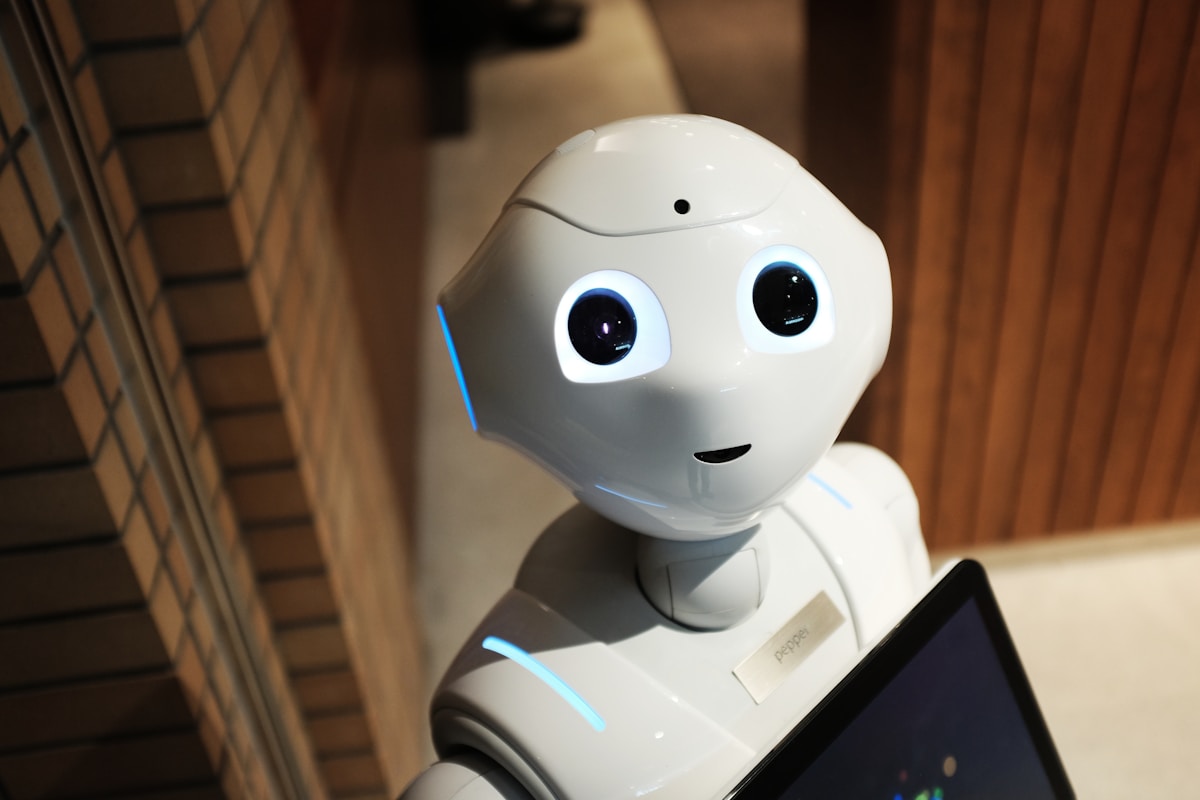
Unitree is known for developing quadruped and humanoid robots. Its products have helped make the company visible beyond the industrial robotics market, particularly as interest in machines capable of moving through environments designed for humans has grown.
A public listing can provide a company with substantial new capital. For a robotics manufacturer, that funding can be used for research and development, manufacturing capacity, supply chains, software development and market expansion.
Humanoid robotics is an expensive field because companies need to combine mechanical engineering, sensors, computing, batteries, artificial intelligence and control systems. Developing a commercially useful robot therefore requires investment across multiple disciplines.
Why Humanoid Robots Are Attracting Attention
Humanoid robots are designed around a basic idea: many workplaces and public environments are already built for people. Stairs, doors, shelves, tools and vehicles generally assume a human body.
A machine with a human-like shape could potentially operate in some of those environments without requiring companies to redesign their infrastructure.
That possibility has attracted interest from technology companies and manufacturers around the world. Developers are exploring applications ranging from factory operations and logistics to research, inspection and eventually household tasks.
However, the technology remains challenging. A robot must maintain balance, understand its surroundings, manipulate objects and respond to changing conditions. Performing these tasks reliably in the real world is significantly more difficult than demonstrating a controlled movement in a laboratory.
Competition in China
China has become one of the most active markets for humanoid robotics. A large manufacturing base gives Chinese robotics companies access to extensive electronics, machinery and component supply chains.
The country's industrial ecosystem can also support rapid experimentation and production. As more companies enter the sector, competition is increasingly focused not only on robot design but also on the ability to manufacture machines at scale.
Unitree's planned listing therefore has significance beyond one company. It illustrates the growing belief among investors and businesses that robotics could become a major technology industry.
What the IPO Means for Investors
An IPO gives investors an opportunity to buy shares in a company, but it also creates expectations around future growth. Robotics companies face a difficult balance between large development costs and uncertain commercial demand.
A successful listing can provide the capital required to accelerate development. At the same time, public investors will expect companies to demonstrate progress toward sustainable revenue and profitability.
For Unitree, the market will likely pay attention to sales growth, manufacturing capacity, product reliability and the development of commercial applications.
The robotics sector also faces technological competition. A company can have impressive hardware but struggle if its software or artificial intelligence systems are not capable of supporting useful real-world tasks.
AI and Robotics Converge
Artificial intelligence is becoming increasingly important to robotics. Modern robots need systems capable of interpreting sensor information, understanding instructions and selecting actions.
This creates a convergence between the AI industry and robotics industry. Improvements in machine learning can make robots more capable, while robotics provides a physical environment in which AI systems can act.
That combination is one reason investors are paying close attention to humanoid robots. The sector sits at the intersection of several major technology trends, including AI, automation, advanced manufacturing and computer vision.
A New Phase for Robotics
Unitree's IPO represents a broader transition for the robotics sector. The industry is moving from a period dominated by demonstrations and venture-backed research toward a phase in which companies must prove that robots can become commercially viable products.
Public markets can provide capital for that transition, but they also bring greater scrutiny.
Investors will want evidence that humanoid robotics can move beyond impressive demonstrations into repeatable business applications. Companies will need to show that their machines are reliable, affordable and useful enough to justify adoption.
For China, the growth of the humanoid robotics industry also fits into a wider push toward advanced manufacturing and automation. For global competitors, the development of Chinese robotics companies creates additional pressure to accelerate their own research and commercialization efforts.
Unitree's planned Shanghai listing is therefore more than a financial event. It is a sign that humanoid robotics is beginning to enter a new stage of industrial development, where technology, manufacturing and investment are increasingly converging.
The success of that transition will depend on whether robots can deliver measurable value outside demonstrations. If manufacturers solve the remaining challenges around reliability, cost and autonomy, humanoid robots could become an important part of the future workforce and industrial economy.
Source Attribution: Reuters, reporting published August 10, 2026. This article is an original news report based on the cited source and does not reproduce Reuters' article verbatim.
Source: https://www.reuters.com/world/asia-pacific/what-is-unitree-why-are-chinas-humanoid-robot-makers-racing-list-2026-08-10/